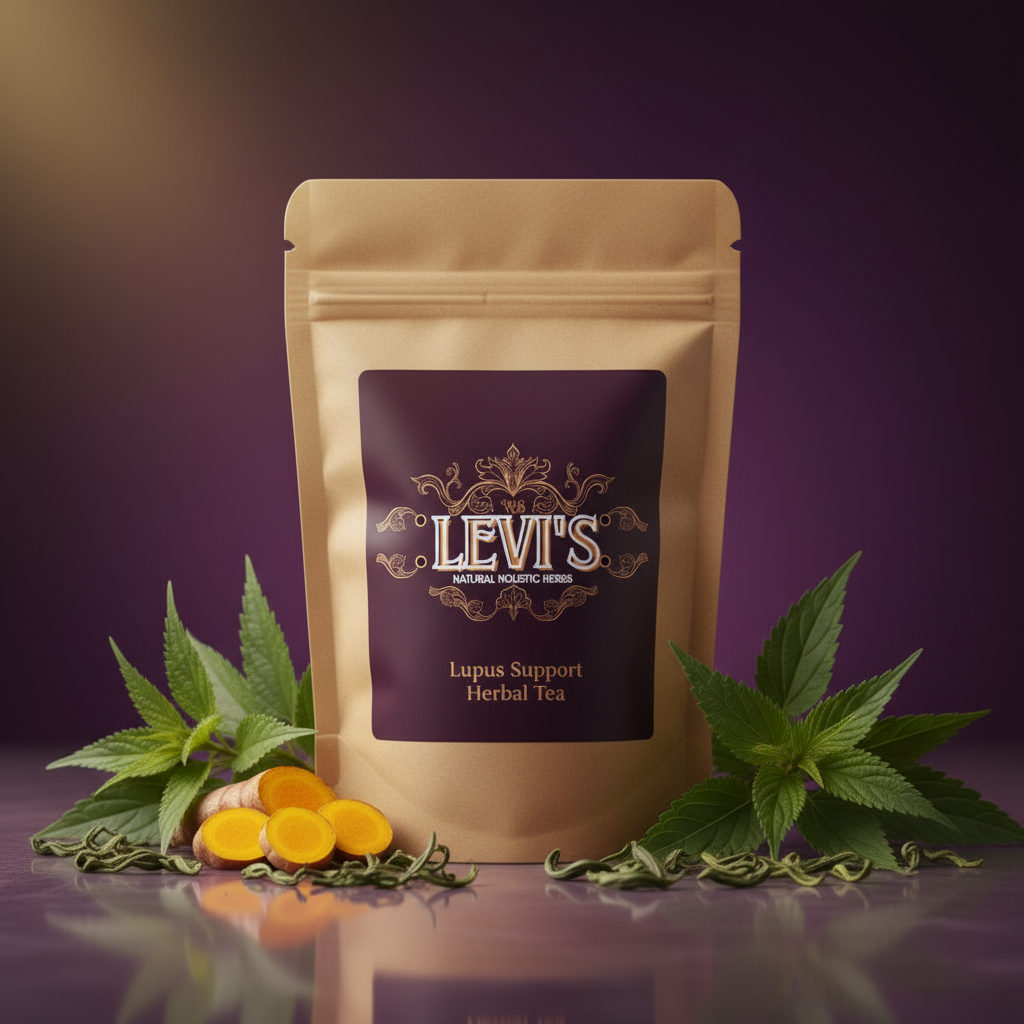
Levi's Natural Holistic Herbs
Lupus Herbal Support Tea — Anti-inflammatory, Immune Calming & Flare Support Herbal Blend
Couldn't load pickup availability
Lupus Herbal Support Tea — Anti-inflammatory, Immune Calming & Flare Support Herbal Blend
Living with Systemic Lupus Erythematosus (SLE) means navigating an unpredictable journey of flares and remissions, fatigue, pain, and the constant challenge of managing a hyperactive immune system that attacks your own body. Our Lupus Herbal Support Tea is a warm, deeply therapeutic herbal infusion crafted as a daily ritual of immune calming, anti-inflammatory nourishment, and stress reduction — the three pillars most critical for reducing lupus flare frequency and protecting organs from cumulative autoimmune damage. The liquid tea format delivers bioactive compounds rapidly into the bloodstream, provides immediate comfort to inflamed joints and tissues, and creates a daily mindfulness ritual that itself reduces the stress-driven immune activation that triggers lupus flares.
⚠️ Critical: This tea is designed to complement — never replace — your prescribed lupus medications. Always consult your rheumatologist before adding herbal supplements to your lupus protocol. Never stop or reduce prescribed medications without physician guidance.
🌿 Best Herbs & Individual Deep Benefits
1. Turmeric Root (Curcuma longa) — Premier Lupus Anti-inflammatory
- Curcumin inhibits NF-κB — the master inflammatory transcription factor most overactivated in lupus — reducing the cascade of cytokines (TNF-α, IL-6, IL-17) driving lupus organ damage
- Reduces anti-dsDNA autoantibody production in animal lupus models — directly targeting the autoimmune mechanism
- Nephroprotective — reduces renal inflammation and proteinuria in lupus nephritis, affecting 50% of SLE patients
- Cardioprotective — reduces the accelerated cardiovascular inflammation that is the leading cause of lupus mortality
- Warm, golden, earthy flavor that makes the tea visually beautiful and medicinally grounding
2. Ginger Root (Zingiber officinale) — Joint Pain & Systemic Inflammation
- Gingerols and shogaols inhibit both COX-2 and 5-LOX — dual-pathway anti-inflammatory action that addresses lupus joint pain, myalgia, and serositis without gastrointestinal side effects
- Reduces prostaglandin E2 production — the primary inflammatory mediator causing lupus arthritis pain, morning stiffness, and joint swelling
- Digestive support — reduces nausea and GI upset caused by hydroxychloroquine, NSAIDs, and other lupus medications
- Warming and circulation-enhancing — reduces Raynaud's phenomenon — the cold-triggered vasospasm extremely common in lupus patients
- Synergistic with turmeric — piperine-like compounds in ginger enhance curcumin bioavailability by up to 2000%
3. Holy Basil / Tulsi (Ocimum sanctum) — Adaptogen & COX-2 Inhibitor
- Ursolic acid and eugenol directly inhibit COX-2 and 5-LOX — providing NSAID-comparable anti-inflammatory activity without the gastrointestinal bleeding risk critical for lupus patients on multiple medications
- Powerful adaptogen — normalizes cortisol and HPA axis dysfunction that drives stress-triggered lupus flares through neuro-immune pathways
- Immunomodulatory — reduces Th17 overactivation while preserving Th1 antiviral immunity — modulating rather than suppressing the immune system
- Cardioprotective — reduces accelerated atherosclerosis and hypertension that disproportionately affect lupus patients
- Warm, clove-spice aroma that enhances the tea's sensory and aromatherapeutic calming properties
4. Lemon Balm Leaf (Melissa officinalis) — Stress Reducer & Nerve Calmer
- Rosmarinic acid inhibits complement system activation — the immune cascade directly responsible for lupus tissue damage in kidneys, skin, and joints
- GABA-enhancing nervine — reduces anxiety, psychological distress, and nervous system hyperactivation that precipitate lupus flares
- Reduces lupus-associated insomnia — sleep deprivation is a direct and potent lupus flare trigger
- Antiviral against Epstein-Barr virus (EBV) — EBV reactivation is strongly associated with lupus flares and disease onset
- Pleasant, mild citrus-herbal flavor that lightens and brightens the earthy base of the tea
5. Green Tea Leaf (Camellia sinensis) — EGCG Immune Modulator
- EGCG directly suppresses Th17 cell differentiation — the immune cell subset most responsible for lupus autoimmunity and autoantibody-driven organ damage
- Promotes T-regulatory (Treg) cell function — restoring immune self-tolerance that prevents autoantibody production against kidney, skin, joint, and cardiac tissue
- Inhibits B cell hyperactivation — reducing anti-dsDNA and anti-Smith antibody production that define lupus disease activity
- Powerful antioxidant — reduces oxidative stress that accumulates organ damage between flares
- Provides gentle caffeine stimulation — addressing lupus fatigue without the adrenal strain of coffee
6. Licorice Root (Glycyrrhiza glabra) — Anti-inflammatory & Adrenal Restorer
- Glycyrrhizin inhibits NF-κB and reduces TNF-α and IL-6 — the primary cytokines driving lupus flare severity and organ damage
- Cortisol-sparing activity — supports endogenous anti-inflammatory cortisol production, particularly valuable for lupus patients tapering off corticosteroid therapy
- Antiviral against EBV — reducing the viral reactivation most associated with lupus flare triggering
- Natural sweetener — makes the anti-inflammatory herbal base palatable without sugar, which worsens lupus gut dysbiosis and systemic inflammation
- Hepatoprotective — protects the liver from lupus autoimmune hepatitis and immunosuppressant medication toxicity
7. Nettle Leaf (Urtica dioica) — Anti-inflammatory & Nutritional Powerhouse
- Inhibits NF-κB, COX-1, COX-2, and pro-inflammatory cytokine production through multiple simultaneous anti-inflammatory mechanisms
- Reduces joint inflammation and pain in autoimmune arthritis — directly addressing lupus arthritis and arthralgia
- Exceptionally rich in iron, magnesium, Vitamin K, and folate — nutrients critically depleted in lupus patients on methotrexate and other immunosuppressants
- Supports kidney function through diuretic activity and anti-inflammatory renal protective compounds
- Reduces lupus-associated anemia of chronic disease through iron and folate content
8. Passionflower (Passiflora incarnata) — Sleep & Pain Support
- GABA-A receptor modulation reduces the anxiety, depression, and psychological distress that are major quality-of-life burdens in lupus and direct flare precipitants
- Promotes deep, restorative sleep — overnight immune restoration is critical for reducing lupus disease activity and preventing flares
- Reduces chronic pain perception through GABAergic central sensitization modulation — addressing the widespread pain and fibromyalgia-like symptoms common in lupus
- Reduces corticosteroid-induced insomnia — a major side effect of prednisone therapy commonly used during lupus flares
- Synergistic with Lemon Balm for comprehensive nervous system calming and stress-flare prevention
💪 Full Support Benefits
🔥 Flare Prevention & Remission Support
- Daily anti-inflammatory herbal loading reduces subclinical inflammation that accumulates organ damage between major flares
- Adaptogenic stress reduction addresses the #1 lupus flare trigger — psychological and physiological stress
- Immune modulation through EGCG and adaptogenic herbs reduces autoimmune hyperactivation driving flare cycles
😴 Sleep, Stress & Mental Health
- Evening cup creates a therapeutic calming ritual that reduces bedtime cortisol — protecting overnight immune regulation
- Addresses the 37–67% prevalence of depression and anxiety in lupus patients through nervine and adaptogenic activity
- Daily tea ritual itself provides mindfulness benefit — mindfulness practice reduces lupus disease activity scores in clinical studies
⚡ Lupus Fatigue Support
- Addresses the most debilitating and undertreated lupus symptom through adaptogenic mitochondrial energy support
- Green tea's gentle caffeine provides clean energy without adrenal strain
- Iron-rich Nettle leaf addresses fatigue driven by lupus-associated anemia of chronic disease
🕐 How Long to Take
- Daily maintenance: 1–2 cups daily — morning for energy and immune modulation, evening for stress reduction and sleep support
- During flares: 3 cups daily alongside prescribed medical treatment for maximum anti-inflammatory support
- Long-term: Daily ongoing as a permanent anti-inflammatory and immune-modulating ritual
- Consistent daily use for minimum 90 days for measurable flare frequency reduction
🍵 How to Brew
- Steep 1 tablespoon of loose tea blend in 10 oz hot water at 195°F/90°C (just below boiling)
- Cover and steep for 10–12 minutes for full curcumin and EGCG extraction
- Strain and sip slowly while warm — ideally seated and mindfully, as the ritual itself has therapeutic stress-reduction value
- Add raw honey and a squeeze of lemon if desired — lemon's Vitamin C enhances curcumin and EGCG bioavailability
- Do not use boiling water — damages delicate volatile anti-inflammatory compounds in Holy Basil and Lemon Balm
- For maximum anti-inflammatory effect: add a pinch of black pepper to the cup — piperine dramatically increases curcumin bioavailability
🍽️ Lupus Diet Plan
✅ Best Anti-lupus Foods Daily
- Wild fatty fish (3–4x weekly): Salmon, sardines, mackerel — omega-3 EPA/DHA directly reduce SLEDAI lupus disease activity scores in clinical trials
- Colorful antioxidant vegetables: Blueberries, leafy greens, beets, sweet potatoes — protect organs from oxidative autoimmune damage
- Turmeric & ginger liberally: Add to all cooked foods for cumulative daily anti-inflammatory loading
- Fermented foods daily: Kefir, kimchi, kombucha — gut microbiome restoration is critical since lupus is strongly associated with intestinal dysbiosis and leaky gut
- Vitamin D-rich foods: Fatty fish, egg yolks, fortified foods — Vitamin D deficiency worsens lupus autoimmunity and is nearly universal in SLE
🚫 Foods to Strictly Avoid
- Alfalfa sprouts — STRICTLY AVOID: L-canavanine directly triggers lupus flares and is specifically contraindicated in SLE — eliminate completely
- Refined sugar & processed foods: Drive gut dysbiosis and systemic inflammation that worsen lupus autoimmunity
- Alcohol: Interacts with lupus medications, worsens liver inflammation and gut permeability
- Excess sodium (limit to 1500mg/day): Worsens hypertension and fluid retention in lupus nephritis
- High-fat red meat: Promotes arachidonic acid-driven inflammation and cardiovascular disease risk in lupus
Who Can Take This
- ✅ Adults 18+ with diagnosed lupus (SLE) — always under rheumatologist supervision
- ✅ Adults with lupus seeking daily anti-inflammatory and stress-reduction support
- ✅ Adults with undifferentiated connective tissue disease (UCTD)
- ❌ Avoid Licorice Root if on corticosteroids without physician guidance
- ❌ Avoid if you have hypertension or kidney disease without physician guidance (Licorice Root)
- ❌ Pregnant or breastfeeding — consult physician before use
- ❌ Always consult rheumatologist before use if on immunosuppressant medications
Warnings
- ⚠️ Never stop or reduce prescribed lupus medications without physician guidance
- ⚠️ Avoid alfalfa in all forms — a confirmed lupus flare trigger
- ⚠️ Always wear SPF 50+ sunscreen daily — UV exposure is the most potent lupus environmental flare trigger
- ⚠️ Disclose all herbal supplements to your rheumatologist and pharmacist
⚠️ Medical Disclaimer: This product is not intended to diagnose, treat, cure, or prevent any disease. These statements have not been evaluated by the Food and Drug Administration. Always consult your licensed rheumatologist and healthcare provider before beginning any new supplement regimen.
Share