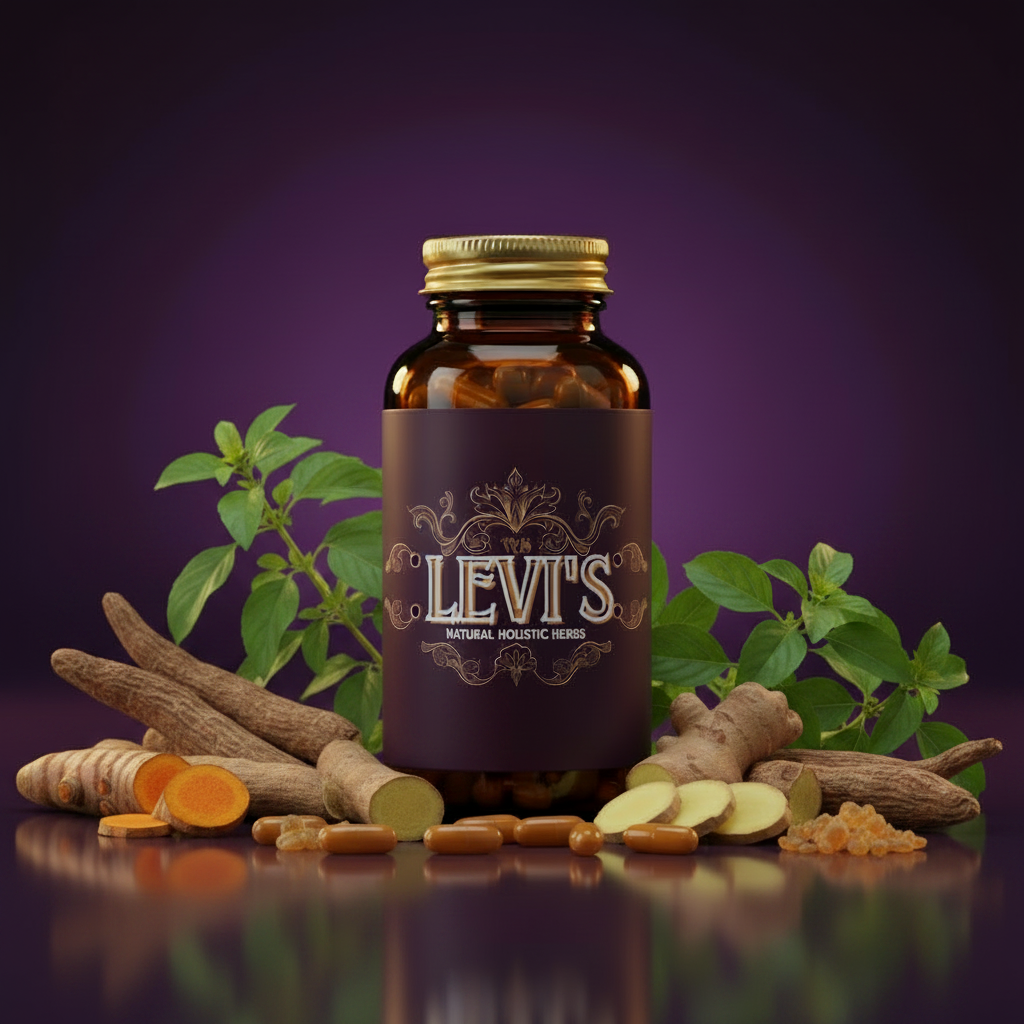
Levi's Natural Holistic Herbs
Lupus Herbal Support Capsules — Immune Modulation, Anti-inflammatory & Organ Protection Blend
Couldn't load pickup availability
Lupus Herbal Support Capsules — Immune Modulation, Anti-inflammatory & Organ Protection Blend
Systemic Lupus Erythematosus (SLE) is a complex, chronic autoimmune disease in which a dysregulated immune system produces autoantibodies that attack the body's own tissues — affecting the skin, joints, kidneys, heart, lungs, brain, and blood vessels with unpredictable cycles of flare and remission. The underlying drivers of lupus — chronic immune dysregulation, oxidative stress, NF-κB-driven systemic inflammation, hormonal imbalance, gut microbiome disruption, mitochondrial dysfunction, and environmental trigger exposure — are precisely the targets that botanical medicine is uniquely equipped to address. Our Lupus Herbal Support Capsules deliver a comprehensive, clinically-informed formula designed to work alongside conventional lupus medications — modulating immune hyperactivation without completely suppressing immune function, reducing systemic inflammation, protecting target organs, addressing fatigue, and supporting long-term remission maintenance.
⚠️ Critical: This formula is designed to complement — never replace — your prescribed lupus medications (hydroxychloroquine, steroids, immunosuppressants). Always consult your rheumatologist and herbalist before adding any supplements to your lupus management protocol. Some herbs can interact with immunosuppressant medications.
🌿 Best Herbs & Individual Deep Benefits
1. Turmeric Root (Curcuma longa) — Master Anti-inflammatory for Lupus
- Curcumin is one of the most comprehensively studied natural anti-inflammatory compounds — directly inhibiting NF-κB, the master transcription factor driving lupus systemic inflammation
- Inhibits COX-2 and 5-LOX inflammatory enzyme pathways — reducing prostaglandin and leukotriene production driving lupus joint pain, serositis, and organ inflammation
- Reduces anti-dsDNA antibody titers in animal lupus models — directly modulating the autoimmune attack mechanism
- Nephroprotective — clinically shown to reduce proteinuria and renal inflammation in lupus nephritis, the most dangerous lupus complication
- Reduces oxidative stress — a primary driver of lupus flare severity and organ damage accumulation
2. Boswellia (Boswellia serrata) — Joint & Organ Anti-inflammatory
- Boswellic acids (AKBA) specifically inhibit 5-lipoxygenase (5-LOX) — blocking leukotriene production that drives lupus joint inflammation, pleuritis, and pericarditis
- Does not inhibit COX-1 — providing powerful anti-inflammatory action without gastrointestinal side effects common with NSAIDs used in lupus management
- Reduces synovial inflammation and joint destruction in autoimmune arthritis — directly addressing lupus arthritis and arthralgia
- Neuroprotective — reduces CNS lupus (neuropsychiatric lupus) inflammation through blood-brain barrier-crossing anti-inflammatory activity
- Reduces serositis (pleuritis, pericarditis) — the inflammation of organ linings that causes chest pain in lupus flares
3. Ashwagandha (Withania somnifera) — Adaptogen & Immune Modulator
- Withanolides modulate Th1/Th2/Th17 immune balance — reducing the Th17 overactivation that drives lupus autoimmunity and autoantibody production
- Reduces cortisol and stress-driven immune dysregulation — stress is the #1 precipitant of lupus flares
- Addresses lupus-associated fatigue — the most debilitating and undertreated lupus symptom — through mitochondrial energy support and adrenal restoration
- Anti-inflammatory through NF-κB inhibition and TNF-α reduction — complementing turmeric's anti-inflammatory activity through different pathways
- Improves sleep quality — sleep deprivation dramatically worsens lupus disease activity and increases flare frequency
4. Green Tea Extract (Camellia sinensis — EGCG) — Autoimmune Modulator
- EGCG (epigallocatechin gallate) directly suppresses Th17 cell differentiation and expansion — the immune cell subset most responsible for lupus autoimmunity
- Promotes T-regulatory (Treg) cell function — restoring immune self-tolerance that prevents autoantibody production against self-tissues
- Inhibits B cell hyperactivation — reducing the autoantibody (anti-dsDNA, anti-Smith) production that causes lupus organ damage
- Nephroprotective — reduces renal inflammation and oxidative damage in lupus nephritis through antioxidant and anti-inflammatory activity
- Reduces lupus-associated cardiovascular risk — lupus patients have 50x increased myocardial infarction risk compared to age-matched controls
5. Omega-3 Rich Herbs (Flaxseed, Evening Primrose Matrix) — Inflammation Resolution
- Alpha-linolenic acid (ALA) from flaxseed is converted to EPA and DHA — the omega-3 fatty acids that produce anti-inflammatory resolvins and protectins that resolve lupus inflammation
- Gamma-linolenic acid (GLA) from evening primrose produces DGLA — which directly competes with arachidonic acid to reduce inflammatory eicosanoid production
- Clinical studies demonstrate omega-3 supplementation reduces lupus disease activity scores (SLEDAI) and proteinuria in lupus nephritis
- Reduces lupus-associated cardiovascular inflammation and dyslipidemia driven by chronic systemic inflammation and corticosteroid use
- Supports skin barrier function — reducing lupus skin manifestations including malar rash, discoid lesions, and photosensitivity reactions
6. Licorice Root (Glycyrrhiza glabra) — Anti-inflammatory & Adrenal Support
- Glycyrrhizin inhibits NF-κB and reduces TNF-α and IL-6 — the cytokines most elevated during lupus flares
- Cortisol-sparing activity — reduces the need for high-dose corticosteroid therapy by potentiating endogenous cortisol anti-inflammatory activity
- Supports adrenal function damaged by long-term corticosteroid use — essential for lupus patients tapering off steroid therapy
- Hepatoprotective — protects the liver from lupus-related autoimmune hepatitis and immunosuppressant medication toxicity
- Antiviral — reduces Epstein-Barr virus (EBV) reactivation, which is strongly associated with lupus flares and initial disease onset
7. Holy Basil / Tulsi (Ocimum sanctum) — Adaptogen & COX-2 Inhibitor
- Ursolic acid and eugenol inhibit COX-2 and 5-LOX — providing dual-pathway anti-inflammatory activity comparable to NSAIDs without GI side effects
- Powerful adaptogen — normalizes cortisol and HPA axis dysregulation that drives lupus flares through stress-immune pathway activation
- Immunomodulatory — restores Th1/Th2 balance without completely suppressing immune function — critical distinction from immunosuppressant drugs
- Cardioprotective — reduces the accelerated cardiovascular disease that is the leading cause of mortality in lupus patients
- Reduces lupus-associated anxiety and depression through serotonergic and GABAergic activity
8. Milk Thistle Seed (Silybum marianum) — Organ Protector
- Silymarin protects the liver from autoimmune hepatitis, lupus-driven hepatic inflammation, and immunosuppressant medication toxicity — all major concerns in SLE management
- Nephroprotective — reduces oxidative damage to renal tubular cells in lupus nephritis
- Reduces methotrexate and azathioprine hepatotoxicity — the two most commonly used lupus immunosuppressants with significant liver toxicity profiles
- Anti-inflammatory through NF-κB inhibition and TNF-α reduction in liver and kidney tissue
- Antioxidant — boosts glutathione levels depleted by chronic lupus-driven oxidative stress and immunosuppressant medications
💪 Full Lupus Support Benefits
🪶 Immune Modulation (Not Suppression)
- Reduces Th17 and B cell hyperactivation — the primary immune mechanisms driving lupus autoantibody production and organ damage
- Promotes T-regulatory cell function to restore immune self-tolerance — addressing root cause rather than just suppressing all immunity
- Reduces inflammatory cytokine production (TNF-α, IL-6, IL-17) without the infection risk of pharmaceutical immunosuppressants
🔥 Flare Reduction & Remission Support
- Stress management through adaptogens — reducing the #1 lupus flare trigger
- Anti-inflammatory support reduces subclinical inflammation that accumulates organ damage between major flares
- Supports remission maintenance through sustained immune modulation and oxidative stress reduction
🫀 Organ Protection
- Nephroprotective herbs support kidney health — lupus nephritis affects 50% of lupus patients and is the leading cause of lupus-related morbidity
- Cardioprotective herbs reduce accelerated cardiovascular disease — the leading cause of lupus mortality
- Hepatoprotective herbs protect the liver from autoimmune hepatitis and immunosuppressant toxicity
⚡ Fatigue & Quality of Life
- Adaptogenic herbs address the profound, treatment-resistant fatigue that affects over 80% of lupus patients
- Improves sleep quality — sleep disruption dramatically worsens lupus disease activity
- Reduces lupus-associated depression and anxiety through nervine and adaptogenic activity
🕐 How Long to Take
- Initial phase (first 60 days): 2 capsules twice daily — allow time for anti-inflammatory and immunomodulatory effects to establish
- Flare management: 3 capsules twice daily during active flares (consult rheumatologist)
- Remission maintenance: 2 capsules daily ongoing for sustained immune modulation and organ protection
- Long-term: Minimum 6–12 months for measurable disease activity improvement — lupus is a chronic condition requiring consistent long-term support
- Monitor disease activity with your rheumatologist every 3 months and adjust accordingly
🍽️ Lupus-Specific Diet Plan
✅ Anti-inflammatory, Anti-autoimmune Foods
- Wild fatty fish (3–4x weekly): Salmon, sardines, mackerel — omega-3 EPA and DHA directly reduce lupus disease activity scores (SLEDAI)
- Colorful vegetables daily: Leafy greens, beets, bell peppers, sweet potatoes — antioxidants protect organs from autoimmune-driven oxidative damage
- Turmeric & ginger: Add liberally to all cooked foods — cumulative daily anti-inflammatory exposure
- Fermented foods: Kefir, kimchi, sauerkraut — gut microbiome restoration is critical since lupus is strongly linked to gut dysbiosis and leaky gut
- Green tea (2–3 cups daily): EGCG provides direct Th17 suppression and Treg promotion between capsule doses
🚫 Foods to Strictly Avoid in Lupus
- Alfalfa sprouts: L-canavanine directly triggers lupus flares and is contraindicated in SLE — avoid completely
- Refined sugar & processed foods: Drive the gut dysbiosis and systemic inflammation that worsen lupus autoimmunity
- Nightshades (for some patients): Tomatoes, peppers, eggplant — solanine may worsen joint inflammation in sensitive individuals; eliminate for 30 days and reintroduce to test
- Alcohol: Interacts with lupus medications, worsens liver inflammation, and promotes systemic inflammation
- Excess sodium: Worsens hypertension and fluid retention in lupus nephritis; limit to 1500mg daily
- UV exposure (dietary photosensitizers): Celery, parsnips, figs in large amounts can worsen UV-triggered lupus skin flares in photosensitive patients
🟢 Essential Lupus Lifestyle Practices
- Sun protection: SPF 50+ sunscreen daily — UV radiation is the most potent environmental lupus flare trigger
- Stress management: Daily meditation, gentle yoga, or breathing practice — stress is the #1 behavioral flare trigger
- Sleep hygiene: 8–9 hours nightly — sleep deprivation dramatically worsens lupus disease activity
- Vitamin D optimization: Maintain levels of 60–80 ng/mL — Vitamin D deficiency is universal in lupus and directly worsens autoimmunity
Who Can Take This
- ✅ Adults 18+ with diagnosed lupus (SLE) — always under rheumatologist supervision
- ✅ Adults with lupus seeking complementary support alongside conventional medications
- ✅ Adults with undifferentiated connective tissue disease (UCTD) at risk of lupus progression
- ❌ Do NOT use without rheumatologist approval if on immunosuppressants (methotrexate, azathioprine, mycophenolate, belimumab)
- ❌ Avoid Licorice Root if on corticosteroids without physician guidance — potentiation effect may require medication adjustment
- ❌ Avoid Ashwagandha if on thyroid medications without physician guidance
- ❌ Pregnant or breastfeeding — consult physician and herbalist before use
Warnings
- ⚠️ Always work with your rheumatologist — lupus is a serious systemic disease requiring professional medical management
- ⚠️ Never stop or reduce prescribed lupus medications without physician guidance — rebound flares can cause serious organ damage
- ⚠️ Some herbs may interact with immunosuppressant medications — disclose all supplements to your rheumatologist and pharmacist
- ⚠️ Monitor kidney function, CBC, and inflammatory markers with your physician regularly
⚠️ Medical Disclaimer: This product is not intended to diagnose, treat, cure, or prevent any disease. These statements have not been evaluated by the Food and Drug Administration. Always consult your licensed rheumatologist and healthcare provider before beginning any new supplement regimen, particularly if you have a diagnosed autoimmune condition.
Share