J & J Hair Essentials LLC / Levi's Natural Holistic Herbs
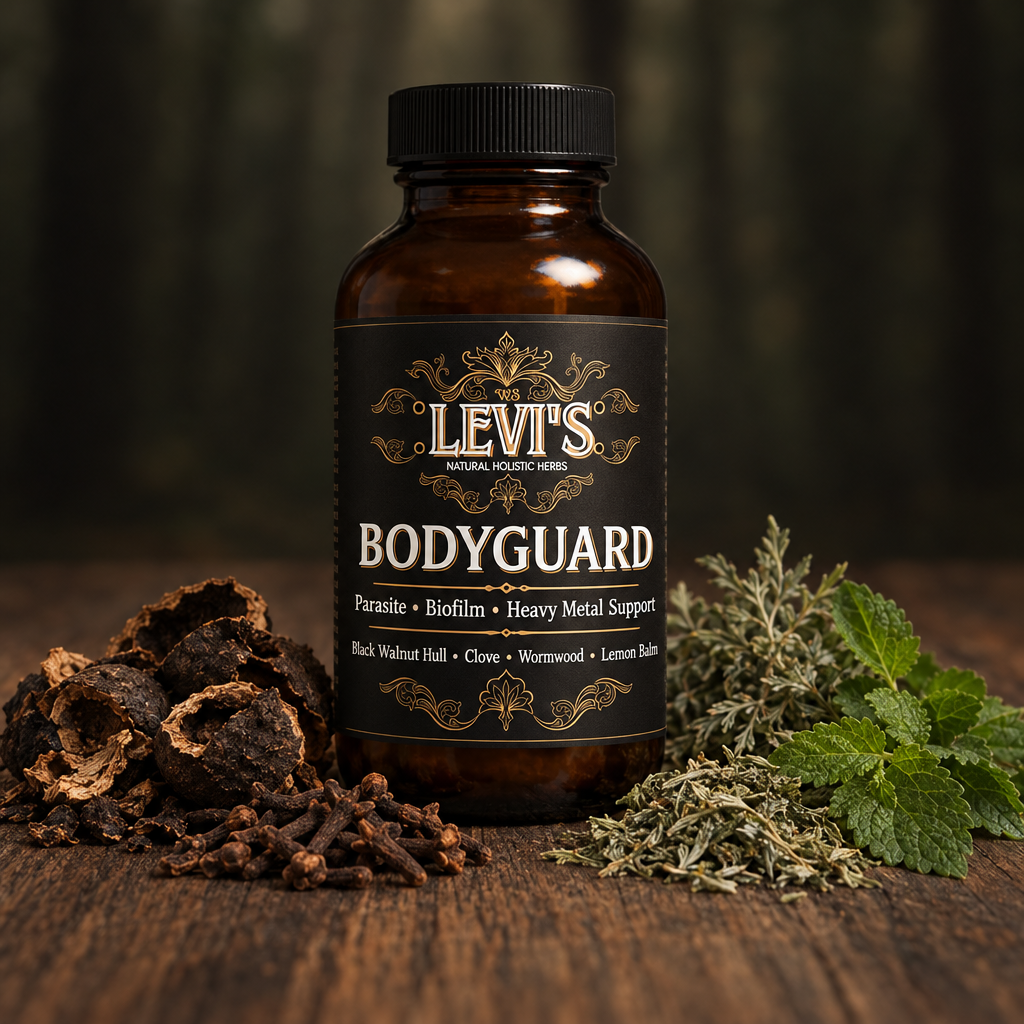
BODYGUARD Parasite, Biofilm & Heavy Metal Support
BODYGUARD Parasite, Biofilm & Heavy Metal Support
Couldn't load pickup availability
Four-Herb Parasite, Biofilm and Detox Support Formula
BODYGUARD combines black walnut hull, clove, wormwood, and lemon balm in a focused botanical formula for adults seeking structured, short-term support for digestive balance, parasite-cleanse wellness, biofilm support, candida balance, and the body’s natural toxin and heavy-metal elimination pathways.
Why Each Ingredient Is in the Formula
Black Walnut Hull (Juglans nigra)
- A core botanical in intestinal and worm-cleanse formulas.
- Provides naturally occurring tannins and polyphenols with a powerful astringent botanical profile.
- Supports digestive balance and normal bowel-based elimination.
- Works alongside wormwood and clove to create the formula’s cleanse-focused foundation.
Clove (Syzygium aromaticum)
- Delivers naturally occurring eugenol and antioxidant botanical compounds.
- Supports digestive comfort and a balanced internal environment.
- Complements the formula across a structured cleanse cycle.
- Provides warming aromatic support for parasite and candida-focused wellness routines.
Wormwood (Artemisia absinthium)
- A potent bitter botanical selected for short-term digestive and intestinal-worm cleanse routines.
- Supports normal digestive secretions and digestive function through its concentrated bitter compounds.
- Helps maintain intestinal balance as part of a structured cleanse plan.
- Best suited to limited cycles rather than continuous long-term use.
Lemon Balm (Melissa officinalis)
- Supports calm digestion and helps ease occasional digestive tension.
- Promotes relaxation, restful sleep, and a balanced stress response during a cleanse routine.
- Balances the stronger bitter and astringent herbs with gentle aromatic support.
- Laboratory research has reported antiviral activity of lemon balm compounds against HSV under controlled in-vitro conditions. This does not prove that BODYGUARD or oral lemon balm inhibits HSV replication in people.
HSV Research Context
Lemon balm has been studied in laboratory and topical-use settings for activity related to herpes simplex virus. These findings provide promising research context, but they do not prove that this oral formula prevents outbreaks, suppresses viral replication in the body, shortens infection, or replaces prescription antiviral medicine.
How the Herbs Fit a Parasite-Cleanse Routine
Black walnut hull and wormwood form the formula’s broad intestinal-cleanse foundation, while clove complements the blend through the full structured cycle. This botanical combination is commonly included in parasite-focused wellness routines. Different parasites have different life cycles, and identifying a specific organism requires laboratory testing and organism-specific medical guidance. Lemon balm contributes digestive calm, stress balance, and general immune support.
Examples of Parasites, Their Locations and Possible Effects
The following information is educational. Symptoms overlap with many non-parasitic conditions, and only appropriate medical testing can identify a specific organism.
- Pinworms: Adults live mainly in the colon and rectum; females lay eggs around the anus. They can cause intense nighttime itching, disturbed sleep, skin irritation, and restlessness.
- Roundworms: Adults live in the small intestine, while larvae can migrate through the liver and lungs. Possible effects include abdominal discomfort, poor nutrition, cough during migration, or intestinal blockage in severe cases.
- Hookworms: Attach to the small-intestinal lining and feed on blood. They can contribute to abdominal symptoms, fatigue, iron-deficiency anemia, weakness, and itchy skin where larvae entered.
- Whipworms: Live in the large intestine. Heavy infection can cause abdominal pain, chronic diarrhea, blood or mucus in stool, anemia, and rectal prolapse.
- Tapeworms: Adults usually live in the small intestine and may cause abdominal discomfort, appetite changes, weight loss, or visible segments in stool. Larvae from certain species can enter tissues, eyes, or the nervous system.
- Strongyloides: Adults live in the small-intestinal lining; larvae may travel through skin and lungs. Symptoms can include rash, abdominal pain, diarrhea, and cough. Dangerous widespread infection can occur in people with weakened immunity.
- Giardia: A microscopic protozoan in the upper small intestine that can cause greasy diarrhea, bloating, gas, cramps, dehydration, and poor nutrient absorption.
- Entamoeba histolytica: A protozoan that primarily affects the colon and can cause abdominal pain, bloody diarrhea, and colitis; it can sometimes spread to the liver.
- Trichomonas vaginalis: A sexually transmitted protozoan that lives primarily in the urogenital tract, including the vagina, cervix, urethra, or prostate. It may cause vaginal discharge or odor, genital itching or irritation, burning with urination, discomfort during sex, urethral irritation, or no symptoms. Untreated infection can persist, spread to sexual partners, increase susceptibility to other sexually transmitted infections, and cause pregnancy complications. It requires clinical testing and prescription antimicrobial treatment; sexual partners generally need evaluation and treatment to reduce reinfection.
Life Cycles, Transmission and Reinfection
- Pinworms: Eggs spread from contaminated hands, bedding, clothing, and household surfaces. Scratching can transfer eggs back to the mouth, creating repeated self-infection.
- Roundworms and whipworms: Infection usually follows swallowing microscopic eggs from soil, produce, hands, or water contaminated with human feces.
- Hookworms and Strongyloides: Larvae in contaminated soil can penetrate bare skin, travel through the bloodstream and lungs, and reach the intestines. Strongyloides can reproduce inside the body and persist for years.
- Tapeworms: Infection can follow eating undercooked beef, pork, or fish containing larval cysts. Swallowing certain tapeworm eggs can lead to larvae entering body tissues.
- Giardia: Spreads through contaminated water, food, surfaces, childcare settings, and close personal contact.
- Entamoeba histolytica: Spreads through contaminated food, water, hands, or close contact.
- Trichomonas vaginalis: Spreads mainly through sexual contact and can pass between partners even when no symptoms are present. Reinfection is common when partners are not treated at the same time or sexual contact resumes before treatment is completed.
Reduce reinfection risk by washing hands with soap, keeping fingernails short, laundering bedding and underwear, cleaning high-touch surfaces, washing produce, using safe drinking water, wearing shoes outdoors, cooking meat and fish thoroughly, practicing safer sex, completing prescribed treatment, and following clinician guidance about partner treatment and retesting.
Symptoms and Possible Complications
Possible symptoms include persistent diarrhea or constipation, abdominal pain, bloating, gas, nausea, appetite changes, unexplained weight loss, fatigue, anemia, anal itching, rash, cough during larval migration, visible worms or segments in stool, genital irritation, unusual discharge, or burning with urination. Some infections cause few or no symptoms.
Potential complications include dehydration, nutrient malabsorption, iron-deficiency anemia, intestinal blockage, rectal prolapse, liver abscess, tissue invasion, or infection affecting the lungs, eyes, muscles, or nervous system. People with weakened immunity can develop severe Strongyloides hyperinfection. Trichomoniasis can persist without treatment and may increase reproductive and sexual-health risks.
HSV-1 and HSV-2 Support Information
Herpes simplex virus type 1 and type 2 are viral infections. HSV-1 commonly affects the mouth and lips but can also cause genital infection. HSV-2 more commonly affects the genital and anal areas. Either type can infect either location.
- How HSV is acquired: HSV spreads through direct contact with infected skin, saliva, oral secretions, genital secretions, or sores. HSV-1 commonly spreads through kissing or oral contact and can spread to the genital area through oral-genital contact. HSV-2 most commonly spreads through genital or anal sexual contact. Transmission can occur even when no sores are visible because asymptomatic viral shedding is possible.
- Location and dormancy: After entering through skin or mucous membranes, HSV travels to nearby sensory nerves and remains dormant in nerve tissue. The virus can reactivate periodically.
- Common reactivation triggers: Illness, emotional or physical stress, sunlight or ultraviolet exposure, hormonal changes, skin friction, poor sleep, fatigue, and weakened immune function may trigger an outbreak in some people. Triggers vary by person and do not represent a new infection.
- Possible effects: Painful blisters or sores, tingling, itching, burning, painful urination, swollen lymph nodes, fever during an initial outbreak, or no recognized symptoms.
- Testing: A swab and molecular test from a fresh lesion is generally most useful. Type-specific blood testing may be appropriate in selected situations after discussion with a clinician.
- Medical care: Prescription antiviral medicine can shorten outbreaks, reduce recurrences, and lower transmission risk, but it does not remove dormant virus from the body.
Seek prompt medical care for a first suspected outbreak, sores near the eyes, severe pain, difficulty urinating, neurological symptoms, pregnancy, newborn exposure, or symptoms in anyone with weakened immunity. BODYGUARD provides general herbal wellness support but does not diagnose or replace medical testing or prescription treatment for HSV.
Testing, Diagnosis and When to Seek Care
- Stool testing: Ova-and-parasite microscopy, antigen testing, or molecular testing may identify intestinal organisms. More than one sample can be necessary because shedding varies.
- Pinworm testing: A morning adhesive-tape test can collect eggs from skin around the anus before bathing or using the toilet.
- Trichomonas testing: A clinician may use a vaginal or urethral sample, urine sample, or nucleic-acid amplification test. Routine stool parasite tests do not diagnose urogenital trichomoniasis.
- HSV testing: A swab from a fresh lesion is preferred when available; blood testing has limitations and should be interpreted by a healthcare professional.
- Blood tests: A clinician may check anemia, eosinophils, liver function, or antibodies for certain tissue-migrating parasites.
- Imaging or endoscopy: These may be needed when tissue invasion, blockage, liver involvement, or nervous-system disease is suspected.
Seek prompt care for blood in stool, persistent vomiting or diarrhea, severe abdominal pain, fever, dehydration, fainting, marked weakness, breathing trouble, jaundice, neurological or eye symptoms, rapid weight loss, signs of intestinal blockage, genital sores, pelvic pain, or unusual genital discharge. Children, pregnant people, older adults, travelers with persistent symptoms, and anyone with weakened immunity should seek professional evaluation early.
Biofilm and Candida Support
BODYGUARD supports digestive and microbial-balance routines by promoting a balanced internal environment, regular elimination, and antioxidant protection. Biofilm support does not mean the product is proven to break apart infection-related biofilms. Candida-focused wellness support is not a diagnosis or treatment for fungal infection.
What Cellular Detox Means
Cells continuously produce metabolic waste and respond to oxidative stress. The body manages this through antioxidant defenses, glutathione-dependent pathways, liver processing, bile flow, kidney filtration, and bowel elimination. BODYGUARD supports this broader process by supplying antioxidant plant compounds, supporting digestion and hydration, and encouraging regular elimination.
- Antioxidant defense: Clove and the other botanicals provide plant compounds that help protect cells from everyday oxidative stress.
- Liver processing: The liver transforms many compounds into forms the body can eliminate.
- Kidney filtration: Drinking plenty of water supports normal urinary elimination.
- Bile and bowel elimination: Digestive regularity helps carry processed waste out of the body.
- Heavy-metal support: The formula supports normal detoxification pathways but is not proven to pull heavy metals directly from cells and is not chelation therapy.
How to Take
Adults: Take 2 capsules once daily with a full glass of water, preferably with a meal. Take at approximately the same time each day. If you have a sensitive stomach, take after eating rather than on an empty stomach.
- Drink plenty of water throughout the day.
- Do not exceed 2 capsules in 24 hours.
- If you miss a serving, skip it and resume the next scheduled serving. Do not double the amount.
- Do not combine with another product containing black walnut hull, wormwood, or high amounts of clove unless a qualified healthcare professional approves it.
Suggested Three-Cycle Wellness Schedule
- Cycle 1: Take 2 capsules once daily for 7 consecutive days.
- Rest: Stop for 2 full days and assess tolerance.
- Cycle 2: Resume 2 capsules once daily for 7 days.
- Rest: Stop for another 2 full days.
- Cycle 3: Complete a final 7 days at 2 capsules once daily.
Do not continue beyond 3 cycles without professional guidance. After all 3 cycles, allow at least 3 months before another cleanse-focused routine.
Supportive Diet and Hydration
- Drink plenty of water and avoid dehydration.
- Choose vegetables, fruit, beans, lentils, whole grains, seeds, and adequate protein.
- Use fiber-rich and fermented foods that you tolerate well.
- Limit alcohol, excess sugar, heavily processed foods, and very greasy meals.
- Avoid fasting, extreme restriction, or stacking multiple cleanse formulas.
Safety and Age Restrictions
For adults 18 and older. Do not use during pregnancy or breastfeeding or with a tree-nut allergy. Ask a licensed healthcare professional before use if you have a seizure disorder, liver or kidney disease, bleeding disorder, digestive disease, thyroid condition, upcoming surgery, HSV, or take medication. Potential interactions include blood thinners, diabetes medicines, seizure medicines, sedatives, thyroid medicines, immune-suppressing medicines, antiviral medicines, and other prescriptions.
Stop use and seek medical advice for rash, swelling, breathing difficulty, severe stomach upset, persistent vomiting or diarrhea, jaundice, unusual bleeding, or another unexpected reaction.
Medical Disclaimer: These statements have not been evaluated by the Food and Drug Administration. This product and information are for educational and general wellness purposes only and are not intended to diagnose, treat, cure, or prevent disease. BODYGUARD does not replace medical testing, prescription treatment for parasites or sexually transmitted infections, antiviral treatment, chelation therapy, or advice from a licensed healthcare professional.
Share